
Quantity Surveyor Salary UK (2026 Guide + Region Breakdown)
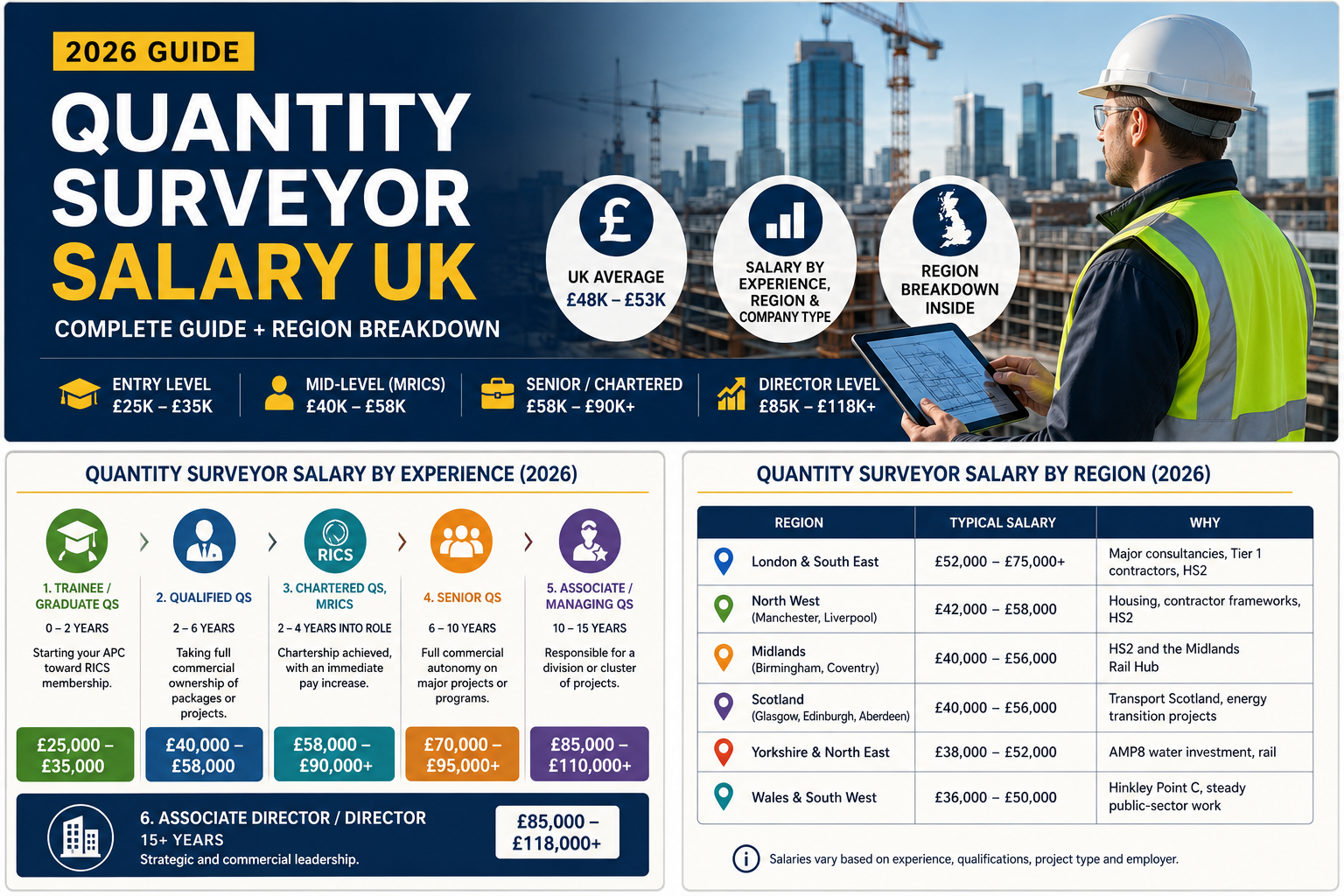
As per my research, UK quantity surveyor salaries span roughly £25,000 at graduate level to £118,000+ at director level, with a realistic national average of around £48,000–£53,000 once you combine data across the major job boards, recruiters and RICS’s own figures.
This guide is built for three audiences: graduates and career-changers weighing up the profession, working QSs preparing for a pay review, job move or APC application, and employers benchmarking a fair salary.
I’m writing this content after extensive research into the current job market; rather than quoting a single average. It breaks pay down by experience, region, employer type, and RICS qualification, so you can find the figure that actually applies to you.
Quantity Surveyor Salary Overview (2026)
| Level | Experience | UK Average Salary | London Average |
| Entry-level (Graduate / Trainee) | 0–2 years | £25,000 – £35,000 | £30,000 – £38,000 |
| Mid-level (working toward/holding MRICS) | 2–6 years | £40,000 – £58,000 | £48,000 – £65,000 |
| Senior-level (Senior / Chartered QS) | 6+ years | £58,000 – £90,000+ | £70,000 – £95,000+ |
| National average (all levels) | – | ~£48,000 – £53,000 | ~£55,000 – £65,000 |
As you can see in the table, not every source reports the same amount, which is worth keeping in mind.
So when looking at what other similar guides say, PayScale puts the national average at a comparatively low £38,672, largely a base-salary-only figure from a self-reported sample skewed toward early-career QSs.
Glassdoor sits higher, at £45,349. Indeed puts it higher still, at £52,831, and Surveyor Success, aggregating Indeed, Reed and Prospects, arrives at a similar £53,000.
So, use £48,000–£53,000 as your baseline, then adjust using the breakdowns below.
Quantity Surveyor Salary Breakdown – 5 factors explained
By experience
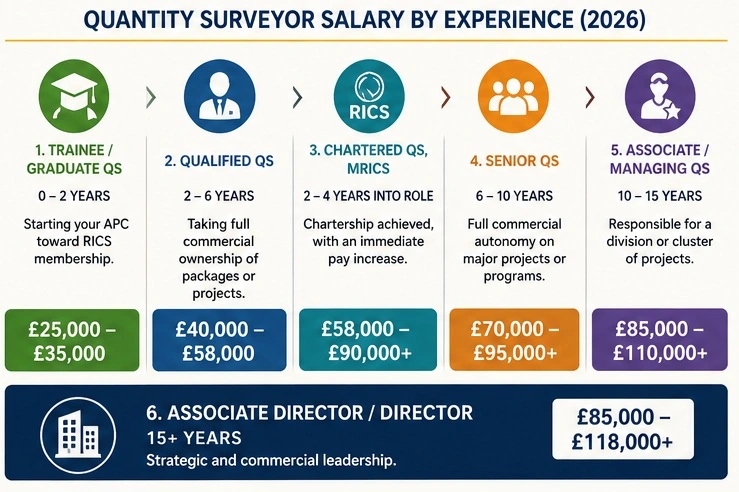
- Graduate / Trainee QS (0–2 years)
A graduate or trainee QS usually earns around £25,000–£35,000, and if you work in London or the south east, you get paid a bit more.
- Qualified QS (2–6 years)
If you are a qualified QS, then this is where you see a real spike in the average salary you might get.
So in this case the salary sits on a range of £40,000–£58,000, and if you have a qualified MRICS chartership then you can try for the highest pay in the range.
- Senior / Chartered QS (6+ years)
£58,000–£90,000+. Senior QS packages basic salary plus a typical £5,000–£8,000 car allowance can reach £90,000 in infrastructure and major commercial work. Prospects and Macdonald & Company data puts qualified QS pay around £55,000 and associate QS or manager pay around £70,000 (Surveyor Success).
- Associate Director / Director
Associate directors usually earn about £85,000 a year, while directors can earn £118,000 or more. These senior jobs are more common in engineering and construction consultancies, where companies usually have clear steps for moving up the career ladder. In contractor companies, the job titles can be different.
- Self-employed and freelance QS
Depending on their experience, industry, and the projects they take on, professionals typically charge between £300 and £550 per day. Experienced specialists working in high-demand sectors can often charge £300 to more than £1,200 per day.
Most freelance quantity surveyors charge between £350 and £600 per day. Those with specialist skills, such as infrastructure or dispute resolution, can earn much more.
Before comparing freelance income with a permanent salary, remember that contractors usually do not receive paid holidays, sick pay, or other employee benefits.
By region
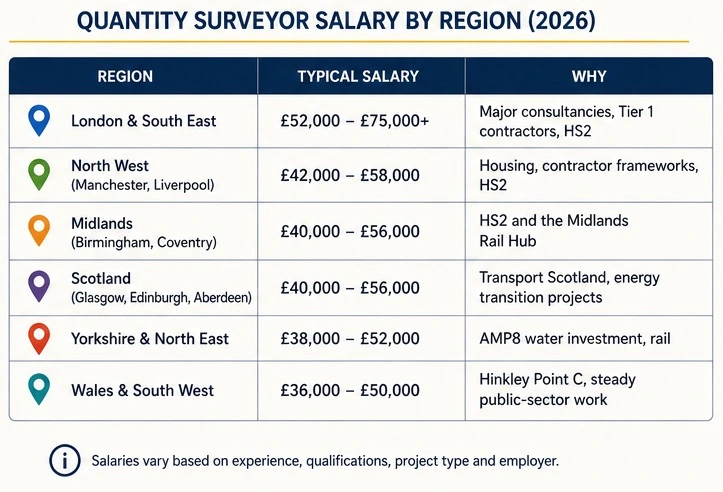
| Region | Typical Salary | Why |
| London & South East | £52,000 – £75,000+ | Major consultancies, Tier 1 contractors, HS2 |
| North West (Manchester, Liverpool) | £42,000 – £58,000 | Housing, contractor frameworks, HS2 |
| Midlands (Birmingham, Coventry) | £40,000 – £56,000 | HS2 and the Midlands Rail Hub |
| Scotland (Glasgow, Edinburgh, Aberdeen) | £40,000 – £56,000 | Transport Scotland, energy transition projects |
| Yorkshire & North East | £38,000 – £52,000 | AMP8 water investment, rail |
| Wales & South West | £36,000 – £50,000 | Hinkley Point C, steady public-sector work |
Regional variation broadly follows the same pattern as other construction professions. Recruiter market data confirms London and South East salaries run materially above the UK average at almost every QS level (Maxim Recruitment), and one industry guide puts typical London pay at £55,000–£65,000, rising to £70,000–£90,000 at senior level (HD Surveyors).
By company type
- Major consultancies (Gardiner & Theobald, Arcadis, Turner & Townsend, AECOM)
These companies usually have a clear career path, from Quantity Surveyor to Associate, Associate Director, and Director. As you move up, your salary and benefits increase.
- Tier 1 main contractors (Balfour Beatty, Kier, Skanska)
Pay is similar to major consultancies. However, job titles are often different. Instead of “Associate,” senior professionals are more likely to become Managing Quantity Surveyors (MQSs) or Commercial Managers. Many senior roles also include a car allowance of £5,000 to £8,000 each year.
- Public sector and client-side
Public sector quantity surveyor jobs usually pay less than jobs in private companies. But they often give you better job security, a good pension, and more time for your life outside work. If you work on public sector projects for a private company, you may still earn a salary that is close to other private sector jobs.
Self-employed/freelance: the highest headline day rate, in exchange for income variability and no automatic holiday or sick pay.
Factors Affecting Quantity Surveyor Salary
As we always say, there are a ton of things to consider when it comes to the average salary of a QS in the UK.
- Professional qualifications.
Becoming RICS qualified is one of the best pathways to increase your salary as a quantity surveyor. Associate members (AssocRICS) earn around £45,000 on average.
Many professionals then work towards Chartered status (MRICS) by completing the Assessment of Professional Competence (APC), which usually takes about two years after earning an approved degree.
Chartered surveyors typically have access to higher-paying roles and better career opportunities.
Chartered surveyors earn roughly £16,000 more on average than non-RICS counterparts (RICS), and chartered QSs specifically earn 15–25% more than non-chartered peers at the same experience level a gap of roughly £8,000–£15,000 a year at mid-career, and £7,000–£15,000 at senior level (Surveyor Success).
- Experience.
As with other technical construction roles, the complexity and value of the packages you’ve managed independently matters more than years alone.
- Location.
Covered above, London and the South East carry a consistent, well-documented premium.
- Project type and sector.
Quantity surveyors in infrastructure and utilities often earn up to 20% more than those working in residential construction. Senior roles in these sectors usually pay the most because of large projects, complex contracts, and high demand for experienced professionals.
Career Progression of a QS in the UK
- Trainee / Graduate QS (0–2 years) starting your APC toward RICS membership.
- Qualified QS (2–6 years) taking full commercial ownership of packages or projects
- Chartered QS, MRICS (typically 2–4 years into the role) chartership achieved, with an immediate pay increase.e
- Senior QS (6–10 years) full commercial autonomy on major projects or programs
- Associate / Managing QS or Commercial Manager (10–15 years) responsible for a division or cluster of projects
- Associate Director / Director (15+ years) strategic and commercial leadership, £85,000–£118,000+
Start your APC as soon as you are eligible. Completing it early is one of the fastest ways to increase your salary and open up better career opportunities.
It also helps to change employers or move between consultancy and contractor roles. Many quantity surveyors receive bigger pay increases by changing jobs than by waiting for a promotion within the same company.
Related Salary Guides
- Civil Engineer Salary UK Guide, the design and technical counterpart to quantity surveying on most projects.
- Site Engineer Salary UK Guide -the on-site delivery role many QSs work alongside day-to-day. Construction Project Manager Salary UK Guide- a common next step for senior QSs moving into full project leadership.
(Update these links to match your site’s URL structure before publishing.)
FAQs
Yes. It offers strong graduate pay, a clear route to chartership, and sustained demand; the sector faces a well-documented skills shortage, with the large majority of employers reporting difficulty filling qualified QS roles.
Not to start working, but most consultancies require it for associate-level roles, and a growing number of Tier 1 contractors require it for commercial manager positions. It also brings a direct, well-documented pay increase.
Conclusion
Finally, early in your career, focus on starting your APC as soon as you can and gain experience in different parts of the job, such as cost planning, valuations, and final accounts. After becoming chartered, your salary will also depend on the sector you work in. Infrastructure and utilities usually pay more than residential construction.
Changing employers or moving between consultancy and contractor roles can also help you earn a bigger salary. Before asking for a pay rise or applying for a new job, compare your salary with people in the same sector, location, and type of company, rather than relying on the UK average.




One Comment