
SSSTS Course Explained (2026 UK Guide)
SSSTS is the short name for Site Supervisors’ Safety Training Scheme. It’s a two-day CITB-approved course that qualifies you to supervise construction work safely, and it’s the standard first step in health and safety training for anyone moving into a supervisory role on a UK construction site.
SSSTS is designed for supervisors, foremen, gangers, and first-line managers who work between site management and the workforce. That is exactly who the course is for. Supervisors are often the first people to notice when safety standards start to slip, and this training gives you the knowledge and confidence to step in, take action, and meet your legal responsibilities.
It’s not a legal requirement. In practice, but, virtually every principal contractor and major housebuilder in the UK expects supervisors to hold a valid SSSTS certificate, so treat it as an industry expectation rather than an optional extra. It’s also specifically endorsed by the UK Contractors Group as the standard for supervisors on UKCG sites.
SSSTS vs SMSTS: which one do you need?
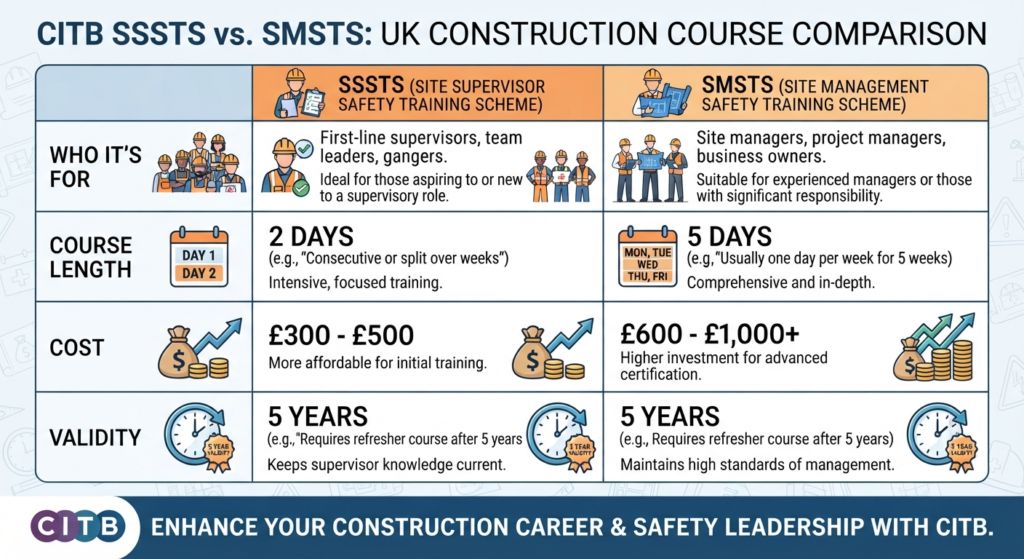
Before we discuss further lets take a quick look at the differences between SSSTS and SMSTS for helping you to find out which is right for you.
| SSSTS | SMSTS | |
| Who it’s for | Supervisors, foremen, gangers, first-line managers | Site managers with overall site responsibility |
| Length | 2 days | 5 days |
| Typical cost | £225 – £350 + VAT | £380 – £550 + VAT |
| Entry requirements | Varies by provider, some ask for a year’s supervisory experience | No formal prerequisites |
| Validity | 5 years | 5 years |
Simply, if you supervise a team within a site and report upward to a manager, SSSTS is the right course. If you’re running the whole site, you need SMSTS.
Most people do SSSTS first and step up to SMSTS a few years later, and the SMSTS Course Guide UK covers that next stage in full.
What the course actually covers?
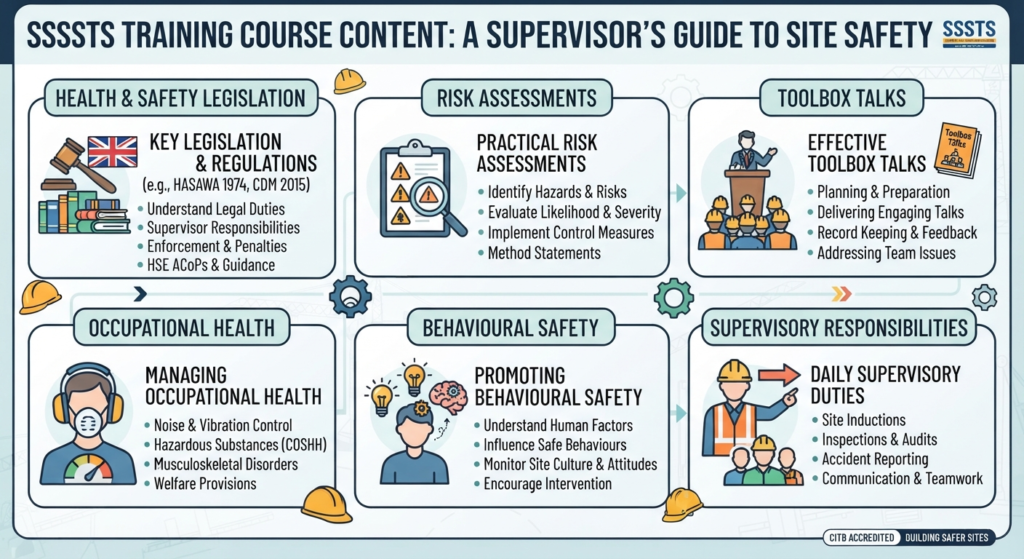
As I mentioned earlier, the two days are built around your legal responsibilities and the practical side of supervising safely.
You can expect
- current health and safety legislation and your duties under it,
- risk assessments and method statements,
- toolbox talks and site inductions,
- occupational health,
- hazard identification and accident prevention,
- environmental responsibilities, and a
- strong focus on behavioural safety,
- communication and leadership.
That last part is worth flagging, because it’s what genuinely separates SSSTS from a paper exercise. A meaningful area of the course is about how to deliver an effective briefing and how to intervene when you see something unsafe, which is often the harder part of the job than knowing the regulations themselves.
The teaching style is interactive rather than lecture-based,
- classroom discussion,
- case studies,
- teamwork and group presentations,
- with some work occasionally set outside the session.
You’re assessed continuously throughout the two days, finishing with a multiple-choice test, typically with an 80% pass mark. There’s no traditional exam to sit.
Does SSSTS get you a Gold CSCS card?
As I know, this is one of the most common misunderstandings in construction, so it’s worth clearing up directly.
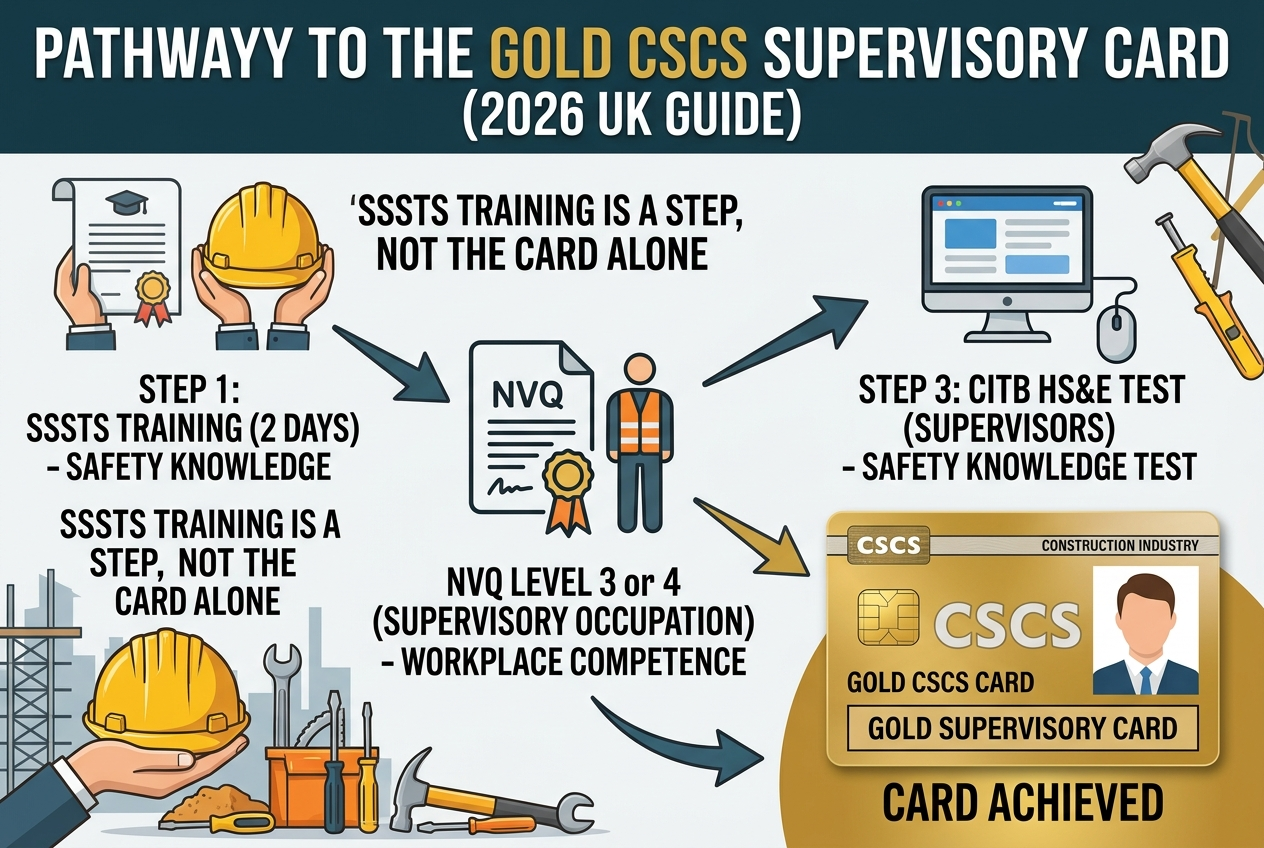
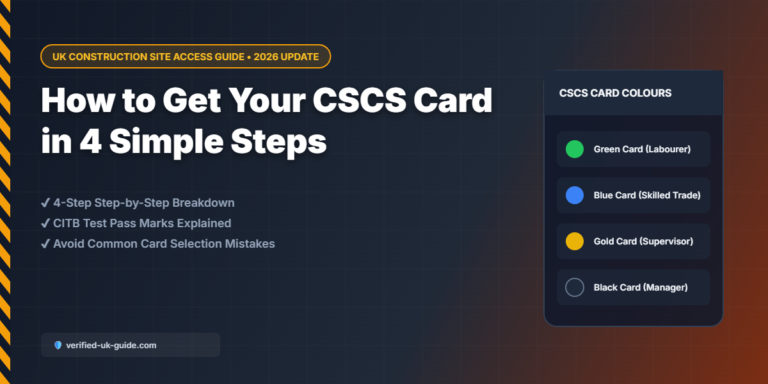
SSSTS does not, on its own, qualify you for a Gold CSCS Supervisory card. The Gold card needs an NVQ or SVQ Level 3 or 4 in a supervisory occupation, plus a pass on the CITB Health, Safety and Environment test for supervisors.
SSSTS is a training course, not a competence qualification, and the two work alongside each other, as most principal contractors expect supervisors to hold both.
If you do not have an NVQ yet, SSSTS can be a good starting point. You do not need a CSCS card to take the SSSTS course, but you will usually need one to work on most construction sites.
What does SSSTS costs?
In 2026, an SSSTS course usually costs between £225 and £350 plus VAT. For example, The Skills Centre offers courses from £225 to £250 in London, CST Training charges £275, and CITB’s National Construction College charges £350.
Most providers include the course materials, registration, and certificate in the price. However, some may charge extra for the handbook or registration, so it is worth checking the full cost before booking.
Funding may be available for employers registered with CITB. In many cases, employers pay for the course because SSSTS is often required for supervisors working on construction projects.
Classroom or online?
Both options are fine. A live online SSSTS course is just as valid as a classroom course. It follows the same CITB syllabus, has the same assessment, and gives you the same certificate.
Just make sure it is a live online course with a CITB-approved provider. Self-paced SSSTS e-learning is different and may not be accepted on site.
For an online course, you only need a laptop, good internet, and a webcam.
Renewing your SSSTS certificate
Your certificate lasts five years, and you renew by passing the two-day SSSTS Refresher course before the expiry date.
If it actually expires, you have to retake the full two-day course rather than the refresher, a real cost and time penalty for what amounts to a diary oversight, so set a reminder a few months ahead of your expiry date.
Where SSSTS takes you?
SSSTS is often the first formal step towards becoming a site supervisor. It helps you understand your legal duties, manage workers safely, and deal with problems on site. For many employers, having SSSTS is important when choosing someone for a supervisory role.
To progress further, you can combine SSSTS with an NVQ Level 3 and the CITB Supervisors’ Test. This can help you work towards moving from a Blue CSCS card to a Gold card. Later, completing SMSTS and an NVQ Level 6 can help you progress towards a Black CSCS card and more senior site management positions.
Common FAQs
Do I need SSSTS to be a site supervisor?
What’s the difference between SSSTS and SMSTS?
How much does SSSTS cost?
Does SSSTS give me a Gold CSCS card?
Is an online SSSTS course legitimate?
Is there an exam?
How long is SSSTS valid, and what if it expires?
Finally,
SSSTS is a two-day CITB course that qualifies you to supervise construction work safely, and it’s the standard entry point into site management. Expect to pay £225 to £350 plus VAT, and remember it doesn’t hand you a Gold CSCS card on its own, you’ll still need the NVQ alongside it.
Make sure any online option is live tutor-led from a CITB-approved provider, not self-paced e-learning. Set a renewal reminder well before the five-year mark, and when you’re ready for a full site, SMSTS is the logical next step.




One Comment