
Civil Engineer Salary UK (2026 Guide + Region Breakdown)
Everyone asks, “How much can I earn as a Civil Engineer in the UK?” But not a lot of people understand what actually decides their salary or which career paths have the best earning potential.
It is not just your experience; other factors also determine how much you’re paid as a Civil Engineer in the UK. Many factors can affect your earnings, including technical abilities, the level of professional qualifications, industry, project involvement, and company size.
In this post, we’ll look at the real reasons why Civil Engineer salaries vary, break down expected pay at different stages of your career, and highlight the roles and skills that can help you move towards the highest-paying opportunities in the industry.
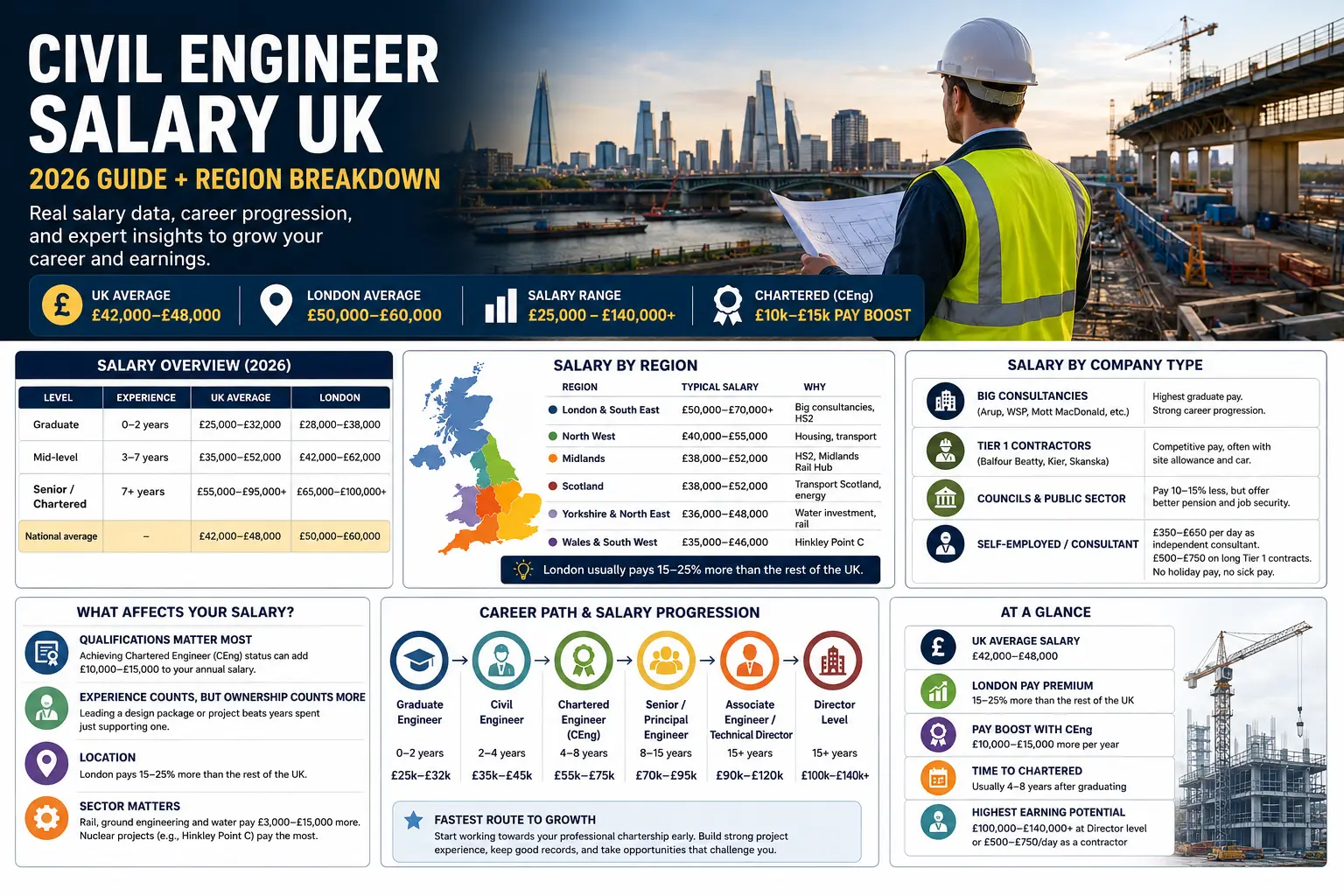
Before we jump in deeper, UK civil engineers earn between £25,000 (graduate) and £100,000+ (director). Blend the main job boards with the Institution of Civil Engineers’ own survey data, and a realistic average sits around £42,000–£48,000.
This guide is for graduates weighing up the job, working engineers due a pay rise or job move, and employers checking what’s fair. Instead of one average, you’ll find pay broken down by experience, region, employer type, and qualifications.
Salary Overview (2026)
| Level | Experience | UK Average | London |
| Graduate | 0–2 years | £25,000–£32,000 | £28,000–£38,000 |
| Mid-level | 3–7 years | £35,000–£52,000 | £42,000–£62,000 |
| Senior / Chartered | 7+ years | £55,000–£95,000+ | £65,000–£100,000+ |
| National average | , | £42,000–£48,000 | £50,000–£60,000 |
Numbers vary widely across sites, and it’s worth knowing why. Indeed says about £44,800. PayScale and Glassdoor say less, around £35,700 and £37,000, because their data leans toward junior engineers. CV-Library says closer to £48,000, which matches ICE’s own 2024 survey.
A few sites quote £60,000+, but that usually blends in bonuses and a lot of senior engineers. So if you are likely a beginner in the field, treat £42,000–£48,000 as your starting point.
What factors affect the salary ranges?
Not every Civil Engineer in the UK gets paid the same, as there are different levels and more factors to consider when it comes to their salary. So it is the time to take a deep look at what helps you get paid the most.
By experience
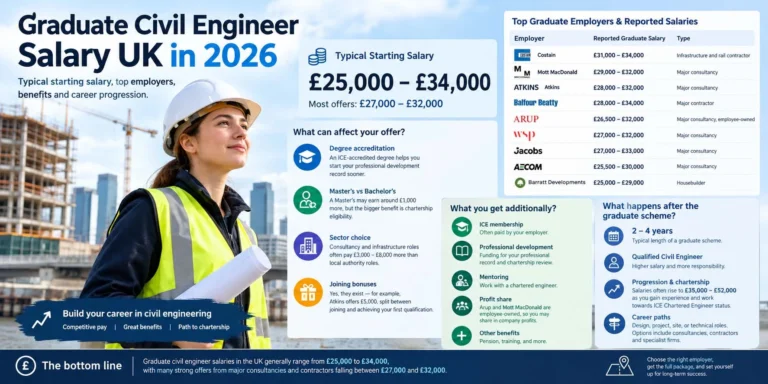
- Graduate (0–2 years): £25,000–£32,000
Big firms like Arup, WSP, Mott MacDonald and Balfour Beatty tend to pay £26,000–£32,000. Councils usually start lower, around £23,000–£28,000.
- 3–7 years: £35,000–£52,000.
Pay climbs as you take ownership of real design work and start dealing directly with clients.
- Chartered / Senior (7+ years): £55,000–£95,000+.
Getting chartered (CEng) usually means an instant pay rise. ICE’s 2024 data puts the median chartered salary at £55,000.
- Director: £100,000–£140,000+.
Directors run whole business divisions and carry profit-and-loss responsibility.
- Self-employed
£350–£650 a day as an independent consultant, or £500–£750 on long Tier 1 contracts. No holiday pay, no sick pay, and your IR35 status changes what you actually keep.
By region
| Region | Typical Salary | Why |
| London & South East | £50,000–£70,000+ | Big consultancies, HS2 |
| North West | £40,000–£55,000 | Housing, transport |
| Midlands | £38,000–£52,000 | HS2, Midlands Rail Hub |
| Scotland | £38,000–£52,000 | Transport Scotland, energy |
| Yorkshire & North East | £36,000–£48,000 | Water investment, rail |
| Wales & South West | £35,000–£46,000 | Hinkley Point C |
London usually pays 15–25% more than the rest of the UK; some sources say 10–20%, but either way, it’s one of the clearest pay gaps in construction.
By company type
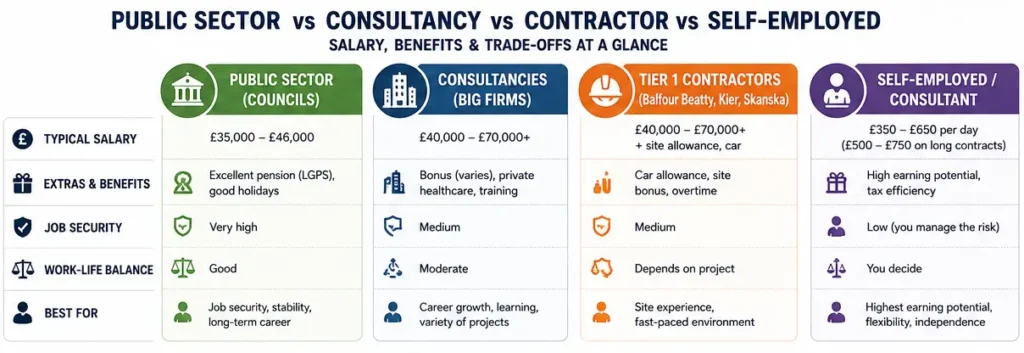
- Public sector (almost always less than big consultancies) –
Average training and about 10–20% less than big consultancies.
- Tier 1 contractors (Balfour Beatty, Kier, Skanska) –
Equivalent salary, in some cases with a site allowance and car.
- Councils and public sector –
Pay 10 to 15 percent less, with better pension and job security.
Consultancies are not the only ones that can pay, as can be big client-side programs such as HS2 and Network Rail can as well.
- Self-employed –
The highest day rate, with no safety net.
What affects your salary?
The journey to becoming a Chartered Engineer (CEng) involves a combination of the right academic background, practical industry experience, and successfully completing a professional review.
For most engineers, becoming a Chartered Engineer (CEng) is a journey that takes around four to eight years. The time it takes can vary depending on your qualifications, the experience you gain on real projects, the responsibilities you take on, and how quickly you build the skills needed to pass the professional review.
Now we know what factors affect the salary ranges, and let’s take a quick look at what matters to you individually when it comes to the salaries.
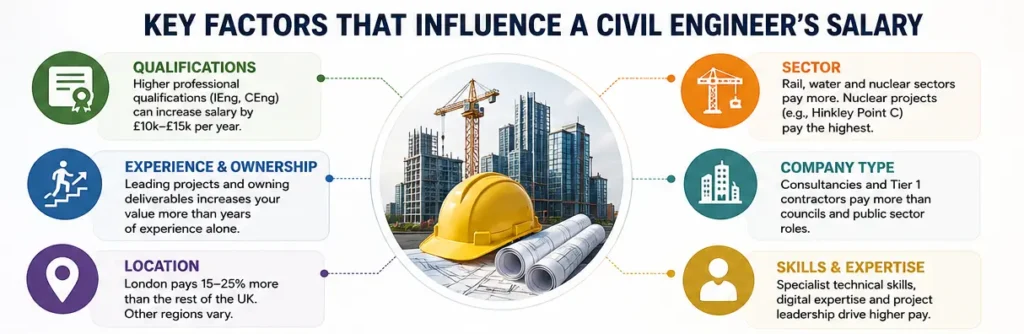
- Qualifications matter most.
The Institution of Civil Engineers (ICE) offers three professional grades: Engineering Technician (EngTech), Incorporated Engineer (IEng), and Chartered Engineer (CEng), with CEng being the highest level of professional recognition.
For many civil engineers, reaching CEng level can significantly improve career opportunities and may increase earning potential by approximately £10,000–£15,000 per year.
- Experience counts, but ownership counts more.
Leading a design package beats years spent just supporting one.
Location covered above.
- Sector matters too.
Rail and ground-engineering work usually pays £3,000–£15,000 more than standard roles, and water projects pay well thanks to the AMP8 investment.
But wanna know what pays the most? Nuclear work, such as Hinkley Point C, pays the most because it involves higher risk and a heavy load of strategic thinking and knowledge.
What is the Career path of a civil engineer in the UK?
- Graduate Engineer (0–2 years)
Get a head start on your career by building technical skills, getting site experience, and working with experienced engineers.
- Civil Engineer (2–4 years)
Increase responsibility; undertake smaller projects; acquire specialist knowledge; start to build evidence for professional registration.
- Chartered Engineer (CEng) (4-8 years)
The CEng qualification is a significant step in your career. It can frequently result in better career prospects, more opportunities, and a substantial pay raise.
- Senior / Principal Engineer (8–15 years)
Lead complex projects, mentor junior engineers, manage technical decisions, and become recognized as a subject matter expert.
- Associate Engineer / Technical Director (15+ years)
Move into strategic roles involving business development, project leadership, technical governance, and team management.
- Director Level (£100,000–£140,000+ salary)
Senior leadership positions involve overseeing major projects, company performance, client relationships, and long-term business strategy.
The Fastest Route to Career Growth
Start working towards professional chartership as early as possible in your career. Keeping track of your experience, projects, and achievements from the beginning will make it much easier to build your CEng portfolio and can help you progress into better roles faster.
Don’t be afraid to make a move when the right opportunity comes up. Switching from a smaller consultancy or public-sector role to a Tier 1 engineering firm can expose you to bigger projects, stronger teams, and more challenging work — helping you grow faster and increase your earning potential.
These experiences can accelerate your professional growth, strengthen your CV, and put you in a better position to achieve higher salaries over time.
FAQs
Yes. Good starting pay, a clear path to chartership, and steady demand from big projects like HS2.
A degree in civil engineering, then progress through ICE: EngTech, IEng, then CEng.
Not to start working, but most senior roles need it, and it comes with an instant pay rise.
Around 15–25% more than the rest of the UK.
A civil engineer designs and plans. A site engineer builds it on-site. Plenty of people do both over the course of a career.
Consultancies usually pay 10–20% more than public-sector client roles. Contractors match consultancy pay at the graduate level, often with extra allowances.
£350–£650 as an independent consultant, or £500–£750 on long contractor programmes.
Usually four to eight years after graduating.
Conclusion
Civil Engineer salaries in the UK can range from around £25,000 to over £100,000, but reaching the higher end of that range is not just about gaining more years of experience. Achieving professional chartership (CEng) can significantly accelerate your career progression and open the door to higher-paying opportunities.
Early in your career, focus on building strong project experience and developing the evidence you need for your ICE professional review. Once you become chartered, sectors such as rail, water, and nuclear engineering often offer some of the strongest salary opportunities.
It’s also worth remembering that changing employers at the right time can lead to a much bigger salary increase than simply waiting for annual raises. Before your next salary discussion, compare your pay with that of engineers in your specific sector, experience level, and location, rather than relying on a single average figure.
Related guides
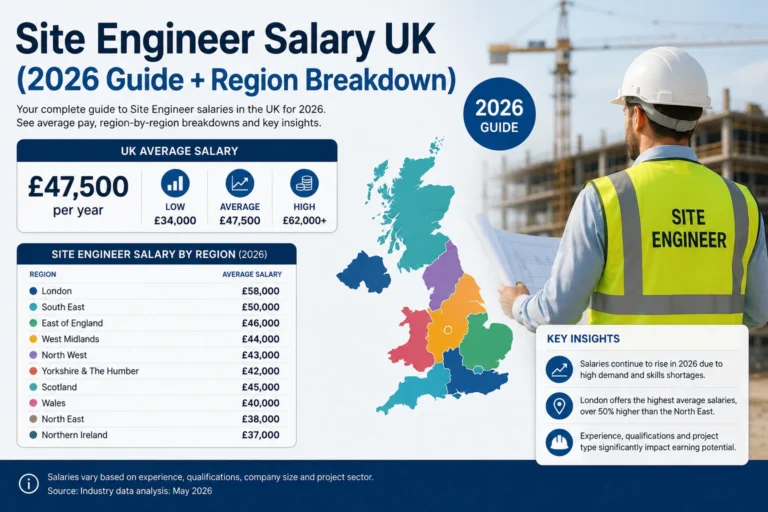
Site Engineer Salary UK, the on-site version of this job, and often the first step for civil engineering graduates.




2 Comments